

Is AI art real art? It depends on the definition you use, and there is no single agreed answer. If art means a made image that moves a viewer, AI images qualify. If it needs human skill and intent, the answer turns on how much a person directed the result. For your wall, choose a piece you will still like.
- The US Copyright Office's January 2025 report concluded that prompts alone do not make a person the author of AI output.
- Human choices, such as selection, arrangement and edits, can still be protected, according to the same report.
- In 2022 an image made with Midjourney took first place in a digital arts category at the Colorado State Fair.
- Photography faced the same question in the 1800s: critics called it mechanical copying before museums collected it.
- For your wall, the practical test is how the piece looks in your room at the size you choose, and whether you know where it came from.
Is AI Art Real Art?
It depends on the definition. Under an open definition, art is a made image or object that produces a response in a viewer, and AI images meet it. Under a stricter one, art needs a conscious maker with intent, skill and a point of view, and the answer depends on how much a person directed the result.
Both sides agree on one thing: the debate is about authorship and labor, not about whether the image can look good. The next sections set out the arguments on each side, then turn to what matters when you hang a piece.

What Do Critics Say Against AI Art?
Critics raise four points about AI art. The first is intent: a model has no experience, emotion or message of its own. The second is craft: typing a text prompt skips years of skill, so the user is closer to a client than a painter. The third is training data: many models learned from works by human artists, often without consent or payment. The fourth is the market, since AI images can undercut working illustrators and the art they sell.
These are serious arguments, and several are being tested in courts and in policy. They concern how the images are made and used, rather than how a print looks on a wall. If they matter to you, they are a reason to ask where a piece of art came from before you hang it.
What Do Supporters Say for AI Art?
Supporters of AI art say AI is a tool, and the human still chooses the idea, the prompt, the edits and the final image. They compare it with the camera and the digital brush. They also point to recognition: in 2022 Jason Allen's Midjourney image "Théâtre D'opéra Spatial" took first place in a digital arts category at the Colorado State Fair, and judges said they would have given it first place even knowing how it was made. At Christie's in October 2018, "Edmond de Belamy," made by the collective Obvious, sold for $432,500, forty-three times its high estimate.
Supporters add that process has never defined art alone. A found object, a photograph or a conceptual piece can count, and the viewer's response matters.

How Does AI Art Compare With Earlier Tools?
Every new image tool has been challenged, then absorbed. The table below sets out what each tool asks of the person using it and what critics said at the time.
| Tool | What the person decides | Early objection | Today |
|---|---|---|---|
| Oil painting | Every mark, color and composition | None; it set the standard | Core fine art medium |
| Photography (1800s) | Framing, light, timing, printing | It is mechanical copying | Collected by museums |
| Digital illustration | Every stroke, with software help | It lacks the hand | Standard in publishing and design |
| Generative AI | Prompt, selection, edits, final use | No intent, no craft, training data | Still disputed |
Pro tip: Judge an image the way you would judge any piece for your wall: stand 6 to 8 feet away, check that the detail holds up at the print size, and ask whether you still like it after a week.
Can AI-Generated Art Be Copyrighted?
Not by prompts alone, according to the US Copyright Office. Its January 2025 report, Copyright and Artificial Intelligence, Part 2: Copyrightability, concluded that current AI systems do not give a user enough control over the output for the user to be its author.
The report also said that human contributions can be protected. These include a creative selection or arrangement of AI output, and creative modifications to it. The Office added that its approach is case by case. If you plan to use an image commercially, check the rules for your situation. Copyright answers who owns an image; it does not tell you whether a piece of art suits your wall.

Watch out: Copyright law and the ethics of AI art are separate questions. An image can be legal to print and still raise questions about how it was made, so decide where you stand before you buy.
Original Art, Art Prints and AI Images: Which Hangs Best?
Three kinds of image end up on walls. An original is one physical work by a named maker. A print reproduces an existing work on canvas or paper. An AI image is generated from a prompt and then printed. All three can look good at the right size, so compare what each one tells you before you hang it.
| Kind of wall art | What you hang | What you can know | Check before you choose |
|---|---|---|---|
| Original painting or drawing | One physical work by a named maker | Who made it and how | Its condition, its size and a wall it suits |
| Print of an original | A reproduction on canvas or paper | Which work it reproduces | Detail at your print size, and the finish: Canvas Print, Framed Canvas, Framed Print or Poster Print |
| Printed AI image | A generated image, then printed | How it was made, if the seller says | Detail at your print size, and how the seller describes the process |
No kind is the safer choice for every wall. An original suits a wall where one object is the point. A print suits a gallery wall, a rental or a room where you change the art as your taste changes. A printed AI image suits a modern room, if you like how it looks and how it was made.
Does AI Art Hurt Artists?
It can, and artists have said so. Illustrators and concept artists report losing commissions to cheaper generated images. Artists also object when a model imitates their art style from works scraped without permission. Others use these tools in their own workflow, for sketches and variations. The effect differs by field and by how the work is credited and paid.
If you care about artists, ask where a piece came from before you buy it, and favor sellers who say clearly how their work was made. Our guide to eco friendly home decor takes the same approach to materials.

How Do You Choose Futuristic or Digital Art for a Wall?
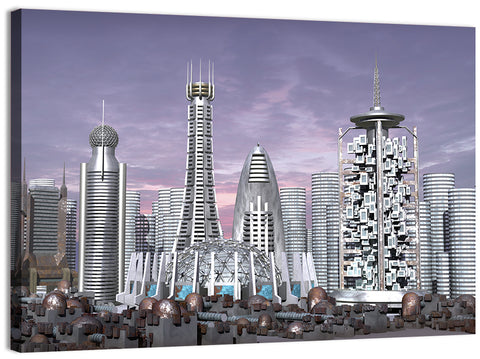
Choose by color, subject and size, not by method. Futuristic and digital images suit modern rooms, offices and game rooms, and they look best large. Our digital prints and astronomy wall art cover space, cities and technology scenes, and our illustrations cover drawn and graphic styles.
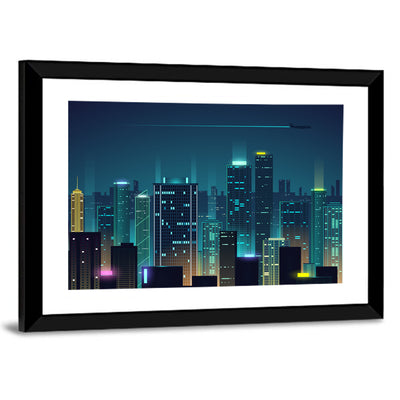
You want a futuristic cityscape above a 48 inch console table. Two thirds to three quarters of the console is 32 to 36 inches, so choose a 36x24 inch landscape canvas. Hang the bottom edge 8 inches above the console top, which is 32 inches from the floor. The bottom edge sits at 40 inches, the center at 52 inches and the top at 64 inches.
- Pick the room and the wall: measure the furniture below to the nearest inch.
- Choose the shape: panoramic for wide walls, portrait for narrow ones.
- Match one color in the image to a color in the room.
- Choose the finish: Canvas Print, Framed Canvas, Framed Print or Poster Print.
- Hang the center at 57 to 60 inches from the floor, or 6 to 10 inches above furniture.

Does the Method Change How a Piece Looks on a Wall?
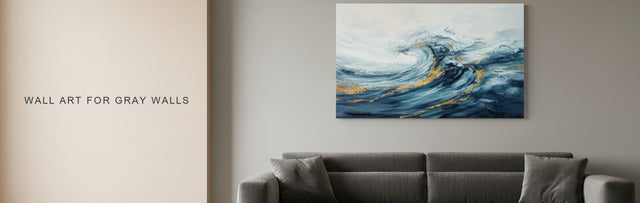
No, a printed image looks the same whatever made it: the detail, color and size decide the result. Our guide to wall art for gray walls shows how to match any piece to your wall color, and painted looks live in our painting wall art and abstract wall art.
How Do You Choose a Piece You Will Keep?
Choose the piece you will still like in five years, not the newest one. These checks apply to original art, prints and AI images alike.
- Match one color in the piece to a color already in the room, so the art belongs from day one.
- Size the art to two thirds to three quarters of the furniture width below it, so it is not lost.
- Keep the piece away from direct sun and damp, and dust it lightly, so it lasts.
- Ask the seller how the piece was made if that matters to you, and accept only an answer you can live with.
Every piece is printed to order and ships free across the US. Browse by subject and pick the finish and shape that fit your wall.
Digital prints Illustrations Painting wall art Astronomy wall art
Quick answers
Common Questions
Is AI art real art?
It depends on the definition. If art is a made image that moves a viewer, AI images qualify. If art needs a human maker with skill and intent, the answer depends on how much a person directed the result. The debate is about authorship and labor, not about how a printed piece looks on a wall.
Is AI art worth hanging on your wall?
It is if you like how it looks at the size you choose and you are comfortable with how it was made. A printed image looks the same on a wall whatever produced it, so judge the detail, color and fit.
How do you choose a piece of art you will keep?
Match one color in the piece to your room, size it to two thirds or three quarters of the furniture below and hang the center 57 to 60 inches from the floor. Stand back 6 to 8 feet and check that the subject still reads.
What is the difference between original art, a print and an AI print?
An original is one physical work by a named maker. A print reproduces an existing work on canvas or paper. An AI print is a generated image that is then printed. All three can look good on a wall; compare what you can know about each before you choose.
How do you choose futuristic art for a wall?
Match one color in the image to your room, size the piece to two thirds or three quarters of the furniture width and pick a calm focal point. Panoramic suits a sofa, portrait suits a narrow wall. Check the detail at the print size, and hang the center 57 to 60 inches from the floor.