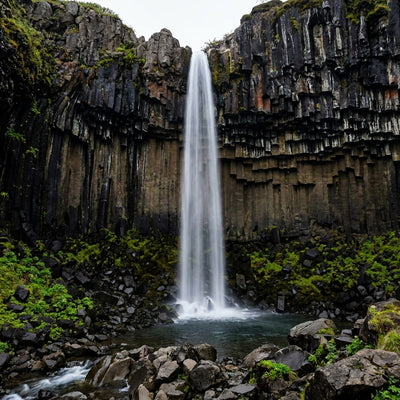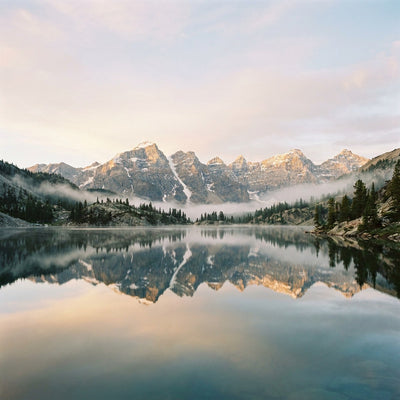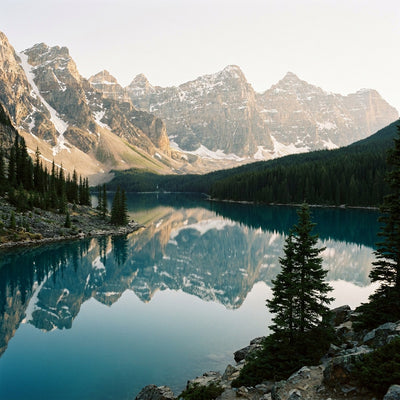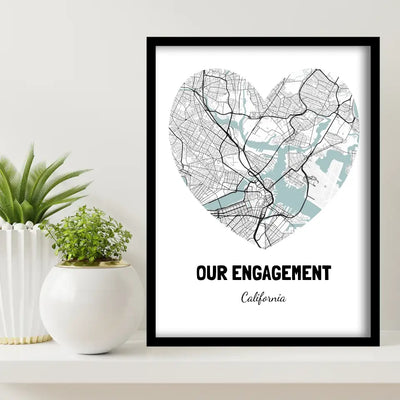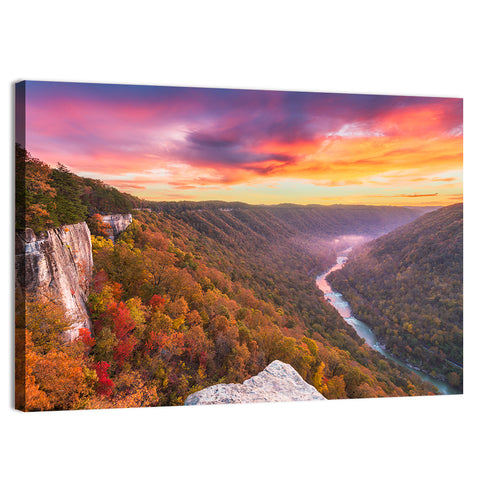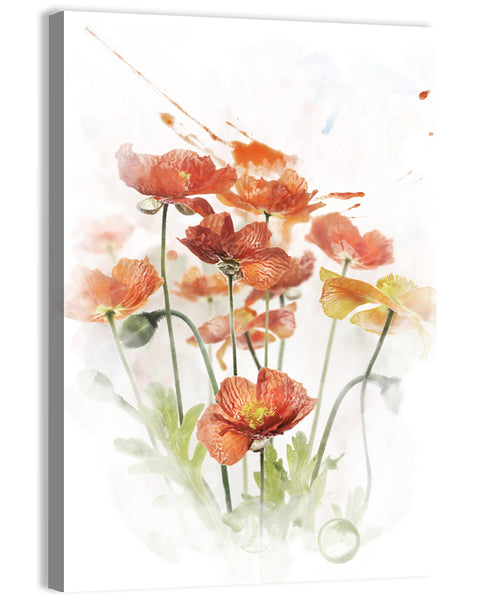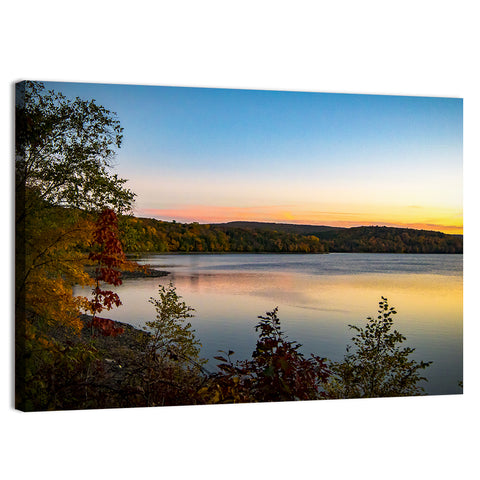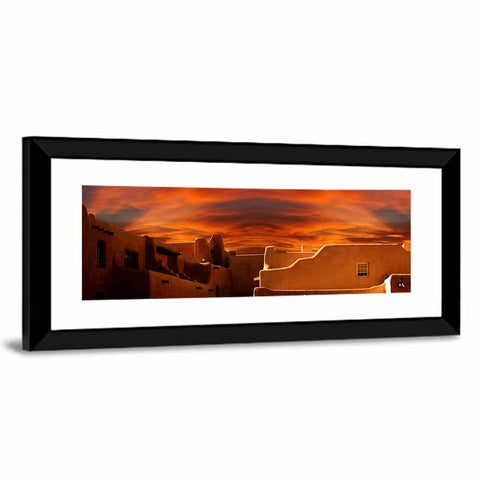
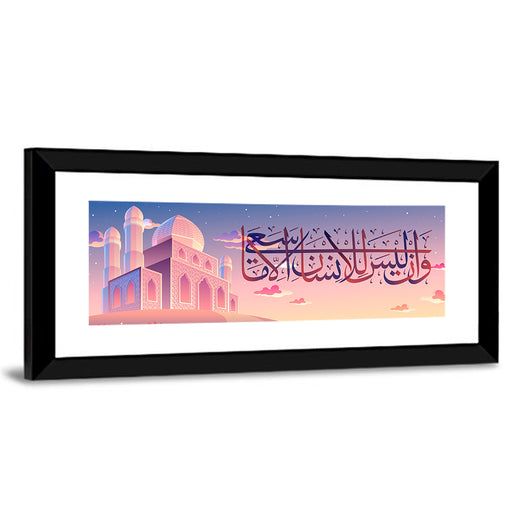


The best hallway wall decor ideas use a few narrow or panoramic pieces hung at an even height, with one larger piece at the end of the run. Center each piece 57 to 60 inches from the floor, space them evenly, and light the wall with warm 2700K bulbs so the corridor reads as a gallery, not a tunnel.
- Hang the center of each piece 57 to 60 inches from the floor, so the whole run sits on one eye-level line.
- In a hallway about 36 inches wide, portrait pieces such as 12x24 or 20x40 inches read better from a few feet away than wide landscapes.
- A panoramic piece, from 24x8 to 60x20 inches, suits a long wall and draws the eye down the corridor.
- Three pieces at equal gaps on a 12 foot wall means 18 inch gaps when each piece is 24 inches wide.
- Warm 2700K bulbs and a pale wall color make a narrow hallway feel wider.
What Are the Best Hallway Wall Decor Ideas for a Long, Narrow Hallway?
The best ideas for a long hallway repeat one move along the wall: a row of matching-height pieces, a single panoramic piece or a ledge with small pieces leaning on it. A corridor has no room to step back, so you see art at an angle and from a few feet away. That favors clear subjects, a limited palette and consistent spacing over a busy arrangement.
The International Residential Code sets a 36 inch minimum width for hallways inside a home, and many corridors sit close to that number. At 36 inches, every inch of depth on the wall counts, so pick fewer, larger pieces over many small ones.

Which Wall Art Works Best in a Narrow Hallway?
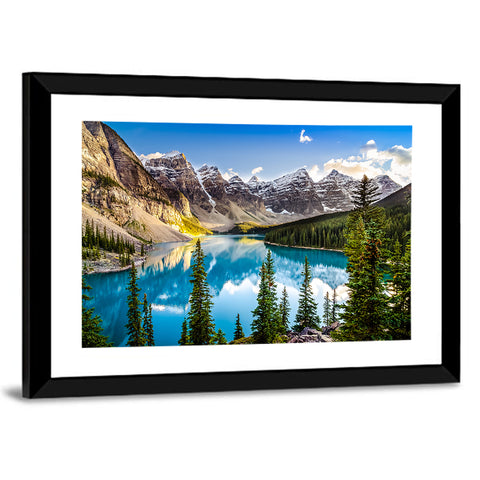
Portrait and panoramic pieces work best, because they follow the shape of the space. Portrait canvas comes in sizes from 8x16 to 30x60 inches, and panoramic canvas from 24x8 to 60x20 inches. Our vertical wall art fits the narrow strips between doors, and our panoramic wall art fits the longer stretches.
Use Portrait Pieces Between Doors
A hallway wall is often broken up by door frames, so the open sections may be only 20 to 30 inches wide. A 12x24 or 20x40 inch portrait piece fits those gaps and adds height to a low ceiling. A single orange poppy cluster in portrait is a warm accent that survives a quick glance.

Use Panoramic Pieces on the Long Wall
A 48x16 or 60x20 inch panoramic piece on an uninterrupted wall acts as a window into a larger place. Sunset skies and long horizons add depth, which helps a corridor feel longer than it is.
Keep the Palette to Two or Three Colors
Pull one color from the rug or the wall and repeat it in each piece. If the runner is striped in cream and navy, blue-toned art such as coastal wall art ties the run together without matching everything.

How High Should You Hang Art in a Hallway?
Hang the center of each piece 57 to 60 inches from the floor, the same height used in galleries. In a hallway, keep every piece on that line, because a change in height shows up fast when you look down a long wall. For a taller piece, such as a 20x40 inch canvas, the center rule puts the bottom edge at 37 to 40 inches and the top at 77 to 80 inches.
| Piece size | Shape | Center from floor | Bottom edge | Top edge |
|---|---|---|---|---|
| 24x8 in | Panoramic | 57 to 60 in | 53 to 56 in | 61 to 64 in |
| 48x16 in | Panoramic | 57 to 60 in | 49 to 52 in | 65 to 68 in |
| 12x24 in | Portrait | 57 to 60 in | 45 to 48 in | 69 to 72 in |
| 20x40 in | Portrait | 57 to 60 in | 37 to 40 in | 77 to 80 in |
For more on sizes, see our wall art size guide.
Pro tip: Cut paper to the size of each piece, tape it to the wall with painter's tape and walk the hallway once. You will see whether the line reads straight before you drive a single nail.
How Do You Space Art Along a Long Hallway?
Space separate pieces at equal gaps, with the same gap at both ends of the run. Add up the widths, subtract from the wall length and divide by the number of gaps, which is the number of pieces plus one. An odd number of pieces, three or five, looks balanced; this is the idea behind the 3-5-7 rule designers use for groupings.
A hallway wall is 12 feet, or 144 inches, long, and you want three portrait pieces each 24 inches wide. The pieces total 72 inches, leaving 72 inches for four gaps (one at each end and one between each piece), which is 18 inches each. The first piece starts at 18 inches, so its center sits at 30 inches. The second center is at 72 inches and the third at 114 inches.
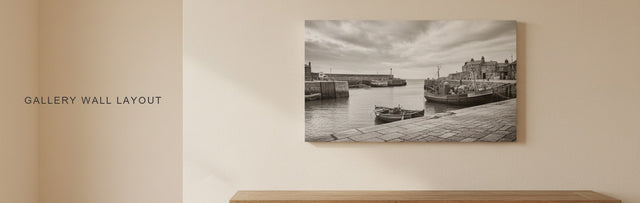
If you prefer a tight cluster, use the gallery rule of 2 to 3 inches between pieces and hang the cluster in the middle of the wall. Our gallery wall layout guide has templates.

Watch out: Do not hang art on the wall beside a swinging door or a stair opening without checking clearance. A piece that sits where shoulders pass will get bumped, so move it one door width away.
How Should You Light a Hallway Wall?
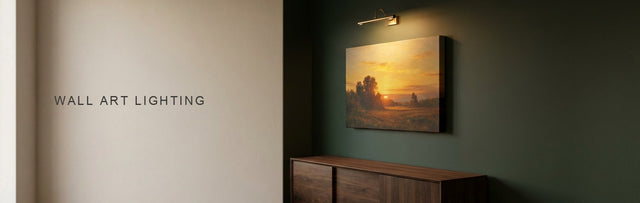
Use warm 2700K bulbs and light from the side or from above at an angle, because a bulb straight overhead washes out the top of a canvas. Wall sconces between pieces keep the floor clear and give a soft pool of light on each. Our guide to lighting canvas wall art covers angles and bulb choices.
In a hallway with no window, a pale wall color adds light, since it bounces what the fixtures give. If you want more brightness, a round mirror at the end of the run reflects the light from a nearby window or lamp.
What Can You Put at the End of a Hallway?
Put one large piece at the end, because it gives the eye a place to stop. A 36x24 or 48x32 inch landscape on a short end wall, or a panoramic piece above a narrow console, works well. A long horizon, a lake or a path leading away adds depth, so nature wall art is a good starting point.
Keep the end wall simple. One piece and one lamp, or one piece and one plant, beat a crowded shelf in a space people walk through.

How Do You Make a Hallway Look More Expensive?
Make a hallway look more expensive by repeating, not filling. Use one frame style, one spacing rule and one color story, and leave plain wall between pieces. Black and white pieces are an easy way to unify a run, and our black and white art pairs with any rug or paint color.
- Measure the wall length and note every door and light switch.
- Choose a piece count: three or five for a long wall, one for a short end.
- Tape paper templates to the wall at a center height of 57 to 60 inches.
- Check the gaps with a tape measure and adjust until they are equal.
- Hang the art, then swap any cool white bulbs for 2700K.
Every piece is printed to order and ships free across the US, in four finishes and four shapes. Start with the shape that fits your wall.
Panoramic wall art Vertical wall art Nature wall art Coastal wall art
Quick answers
Common Questions
What to put on a wall in a hallway?
Put up portrait pieces between doors, a panoramic piece on a long wall and one larger piece at the end. Hang them with their centers 57 to 60 inches from the floor and space them evenly. Add a sconce or a mirror if the hallway is dark. Keep the number of items low, since a narrow space shows clutter quickly.
What is the 3-5-7 rule for decorating?
The 3-5-7 rule is a styling guideline that groups objects in odd numbers, because an odd count looks balanced and less staged than an even one. In a hallway, that means three or five pieces along a wall, or three objects on a console. Use it as a starting point, then adjust to the length of the wall.
What are some cool ideas for decorating my hallway?
Try a row of three matching-height portrait pieces, a panoramic print above a narrow console, a slim picture ledge with leaning pieces or a large landscape at the end of the run. A runner rug in a stripe adds direction. Choose one idea and repeat it, rather than combining all of them.
What is the most welcoming color for a hallway?
A warm white, soft cream or light greige is the most welcoming color for most hallways, because it reflects the light that a narrow space lacks. Pair it with art that has warm tones, such as a sunset or a meadow, and use 2700K bulbs. Deep colors can work on short hallways with good light.
How do you make a small hallway look bigger?
Use pale walls, a runner that follows the length of the floor and art with a long horizon. Keep the wall clear of bulky shelves and hang fewer, larger pieces at one height. A mirror at the end, or beside a window, bounces light and adds depth. Warm 2700K bulbs keep the space bright without glare.