

Islamic wall art falls into three groups: Arabic calligraphy, mosque and holy-site scenes, and geometric or minimalist designs. Pick the group that fits the room, size the piece to the wall, and check the Arabic text and its translation before you order. Landscape or panoramic prints suit a living room, and square or portrait pieces suit a hallway.
- Calligraphy comes in distinct scripts: Kufic is angular, Naskh is a clear cursive and Thuluth is a large, proportioned style.
- Ayat al-Kursi is Quran 2:255 in Surah Al-Baqarah, and Bismillah ir-Rahman ir-Rahim means "In the name of God, the Most Gracious, the Most Merciful."
- Over an 84 inch sofa, aim for art 56 to 63 inches wide, such as a 60x20 inch panoramic canvas.
- Mosque scenes carry less text than calligraphy, so they suit a room where several people share the wall.
- Every piece is printed to order in one of four finishes, with Free Shipping on US orders.
What Is Islamic Wall Art?
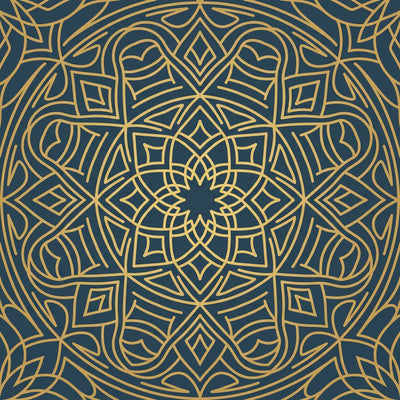
Islamic wall art is decor that carries Arabic calligraphy, a mosque or a holy site, or a geometric pattern. In calligraphy pieces the letters are the subject, not a caption. Mosque and skyline scenes make the second group, and abstract line work makes the third.
Searches for the topic include islamic wall decor and islamic calligraphy wall art, and the choices below follow those groups. Our Islamic calligraphy wall art collection holds the text-led pieces, and the mosque wall art collection holds the architectural ones.

Which Calligraphy Styles Are Used in Islamic Wall Art?
Three scripts appear most often: Kufic, Naskh and Thuluth. Kufic is the angular, early script, used to copy the Quran from the 8th to the 10th century. Naskh is the clear cursive that became standard for copying books. Thuluth, whose name means one third in Arabic, is a large, monumental style used for headings and inscriptions, as Wikipedia's entry on Islamic calligraphy describes.
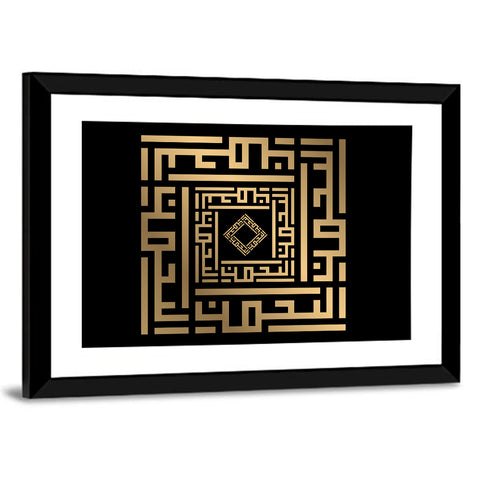
For a wall, the difference is legibility. Kufic reads as a pattern from across a room and suits a square piece, while Naskh and Thuluth read as lines of text and suit a landscape or panoramic shape. Our Ar Rahman Kufi style piece shows the square, geometric look. Ar-Rahman, meaning the Most Gracious, is also the title of the 55th chapter of the Quran.

What Do Common Verses and Phrases Mean?
The phrases people look for most are short and well documented. Check the transliteration and translation on any product page against a trusted source, because spelling varies in English.
| Phrase or verse | Transliteration | Meaning and source |
|---|---|---|
| Basmala | Bismillah ir-Rahman ir-Rahim | "In the name of God, the Most Gracious, the Most Merciful" |
| Ayat al-Kursi (Throne Verse) | Ayat al-Kursi | Quran 2:255, in Surah Al-Baqarah, the second chapter |
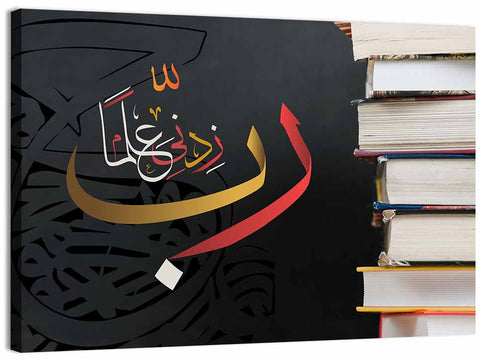
| A prayer for knowledge | Rabbi zidni ilma | "My Lord, increase me in knowledge," Quran 20:114, in Surah Ta-Ha |
| SubhanAllah | SubhanAllah | "Glory be to God" |
| Alhamdulillah | Alhamdulillah | "All praise is for God" |
Our Rabbi Zidni Ilma piece carries the prayer from Ta-Ha, which suits a study, a child's room or a home office. Ayat al-Kursi is widely recited and displayed, and the verse describes God's sovereignty.
Pro tip: Ask someone who reads Arabic to look at the text on the product image before you order, and confirm that the translation on the page matches. It takes two minutes and catches a typo before it is printed.
Which Mosque and Holy Site Scenes Work as Islamic Wall Decor?
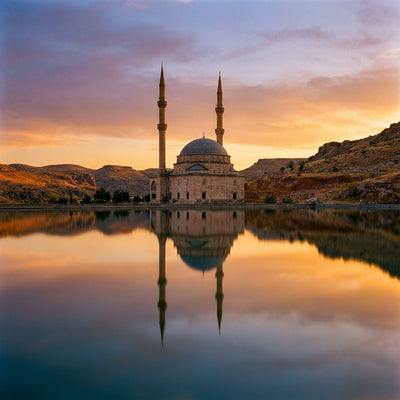
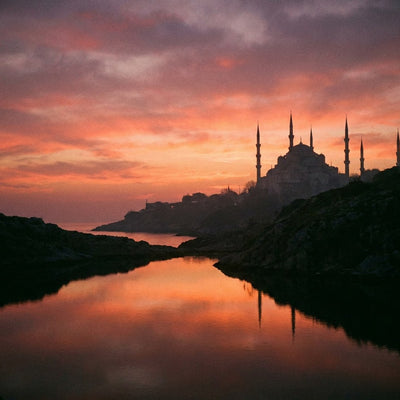
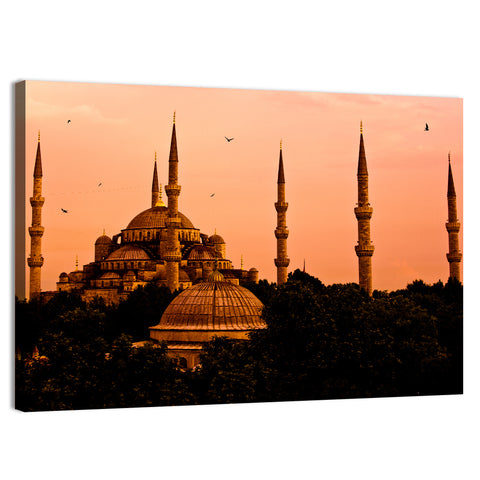
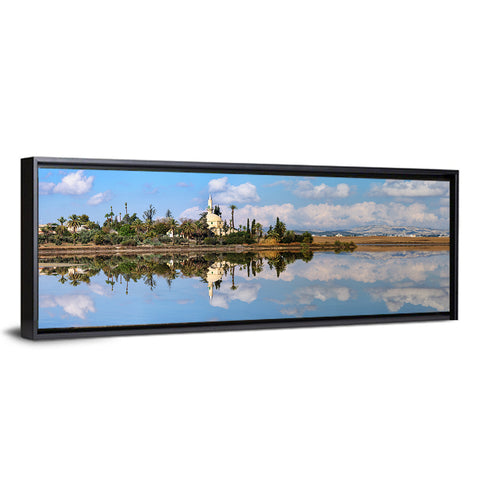
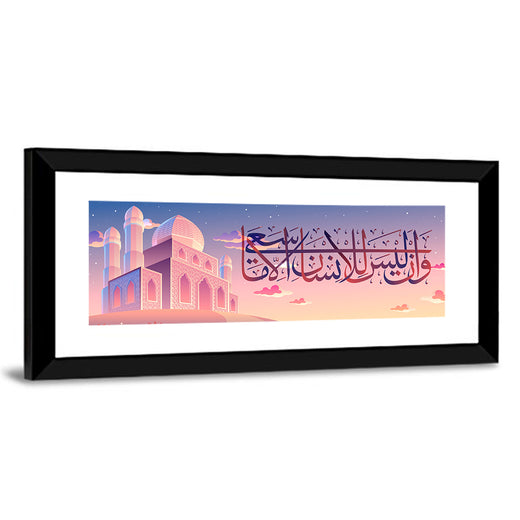
Mosque scenes work best when you want the room to feel calm without text on the wall. We picture the Sultan Ahmed Mosque at sunset in Istanbul, Faisal Mosque in Islamabad, Al-Masjid An-Nabawi at dusk and the Hala Sultan Tekke Mosque in a panoramic crop. Each is one print, in a Canvas Print, Framed Canvas, Framed Print or Poster Print finish.
Browse Istanbul wall art for domes and skylines, Saudi Arabia wall art for Makkah and Madinah scenes, and the wider Middle East wall art for more places.

How Do You Hang Quranic Verses Respectfully?
Many families keep Quranic calligraphy in the living room or hallway and hang it high, away from floor level. We do not give religious rulings, so ask your imam or a scholar you trust. Published answers from IslamOnline and Darul Ifta Birmingham say Quranic calligraphy at home is acceptable when it is treated with respect.
Some Hanafi answers, including one published by Seekers Guidance, discuss avoiding bedrooms, or moving or covering verses where a person changes clothes. Darul Ifta Birmingham adds that verses are hung as a reminder, not for show. Practices differ between families and schools of thought.
Watch out: Do not choose a spot first and a size second. Pick a room your household treats as respectful, then measure that wall.
How Big Should Islamic Wall Art Be?
Size the piece to the furniture below it: two thirds to three quarters of its width, with the bottom edge 6 to 10 inches above it. Landscape canvas comes in sizes from 12x8 to 60x40 inches, panoramic from 24x8 to 60x20, and square from 12x12 to 48x48. Not every piece offers every size.
An 84 inch sofa calls for art 56 to 63 inches wide, since two thirds of 84 is 56 and three quarters is 63. A 60x20 inch panoramic mosque scene is 60 inches wide, so it fits. Set its bottom edge 8 inches above the back cushions. For a 40 inch wide entryway console, two thirds is about 27 inches, so a 24x24 inch square calligraphy piece fits.
How Do You Style Islamic Wall Art in a Living Room?
Treat one piece as the focal point and keep everything near it quiet. A calligraphy print in gold and black suits white, cream and stone walls, and a mosque scene at dusk suits warm neutrals. Add a brass lantern or a wool rug, and leave the other walls bare.
- Measure the sofa or console width, then multiply by 0.67 and 0.75.
- Choose calligraphy for a text-led wall or a mosque scene for a quiet one.
- Pick the shape: panoramic over a sofa, square or portrait for a narrow wall.
- Choose a finish: Canvas Print for a soft look, Framed Canvas or Framed Print for a finished edge.
- Hang the center of the piece at 57 to 60 inches from the floor where the furniture allows.
For more layout ideas, see our guide to living room wall decor. If a piece is a gift, personalized wall art shows how to match a piece to the person.

What Are the Other Options Besides Calligraphy?
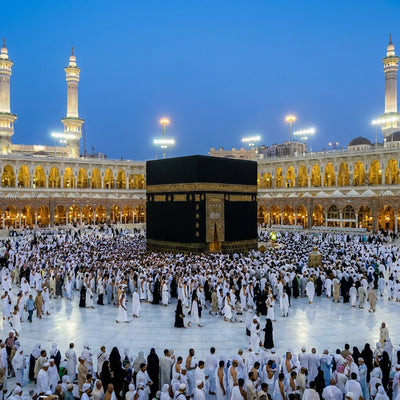
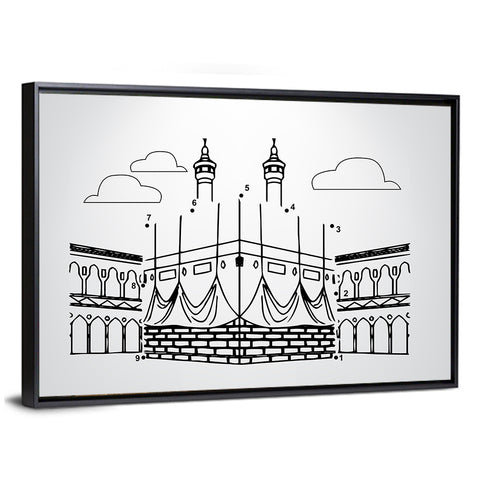
Minimalist line art and place-based scenes give a quieter choice. The Khana E Kaaba piece is a minimalist line drawing, and the Kaaba overhead night view shows the site after dark. Both come in landscape and square shapes.
Printed wall art does not replace other formats. Metal, wood and glass pieces are sold elsewhere, and CanvasPiece prints on canvas and paper only.

Every piece is printed to order, in four finishes and four shapes, with Free Shipping on US orders.
Islamic calligraphy wall art Mosque wall art Istanbul wall art Middle East wall art
Quick answers
Common Questions
What is Islamic wall art?
Islamic wall art is decor that features Arabic calligraphy, mosques and holy sites, or geometric patterns. Calligraphy pieces often carry a short verse or phrase such as Bismillah ir-Rahman ir-Rahim, which means "In the name of God, the Most Gracious, the Most Merciful." Mosque pieces carry architecture instead of text.
What is the most popular Islamic calligraphy for the wall?
The Basmala, Ayat al-Kursi, SubhanAllah and Alhamdulillah are among the most searched. Ayat al-Kursi is Quran 2:255 in Surah Al-Baqarah. Pick the text that matters to your household, and check the transliteration and translation on the product page before you order.
What size Islamic wall art fits over a sofa?
Choose art two thirds to three quarters as wide as the sofa. For an 84 inch sofa that is 56 to 63 inches, so a 60x20 inch panoramic canvas works. Hang the bottom edge 6 to 10 inches above the back cushions so the art reads as part of the seating area.
What is Kufic calligraphy?
Kufic is an angular early Arabic script that was the main style used to copy the Quran from the 8th to the 10th century. On a wall it reads as a bold pattern, which is why it often appears in square pieces and minimalist designs.
Can you hang Islamic wall art in a bedroom?
Practices differ, and this is not a religious ruling. Some Hanafi answers advise against hanging Quranic verses in a bedroom or suggest covering them where a person changes clothes. Others say respectful display at home is fine. Ask your imam or a scholar you trust, and consider a mosque scene with no text for a bedroom.